1- Huong Pagoda Festival – Hanoi
The Huong Pagoda Spring Festival is always vibrant and sacred, attracting tens of thousands of visitors and pilgrims praying for good fortune in the New Year. The festival takes place from February 18 to May 11 (the 2nd day of the first lunar month to the 25th day of the third lunar month).
The festival space covers the entire Special National Relic Site of Huong Pagoda in My Duc commune, featuring four sightseeing routes and 20 temples, pagodas, and Buddhist caves. In addition to the Thien Tru – Huong Tich route, visitors can explore Thanh Son Pagoda, Huong Dai Cave, Long Van Pagoda, Cay Khe Pagoda, Nguoi Xua Cave, and Tuyet Son Pagoda.
After the main traditional festival, the locality continues organizing cultural, spiritual, sports, and artistic activities to extend the tourism season, aiming to welcome visitors year-round. The ticket price for the Huong Tich route is 230,000 VND per adult
2- Lim Festival – Bac Ninh
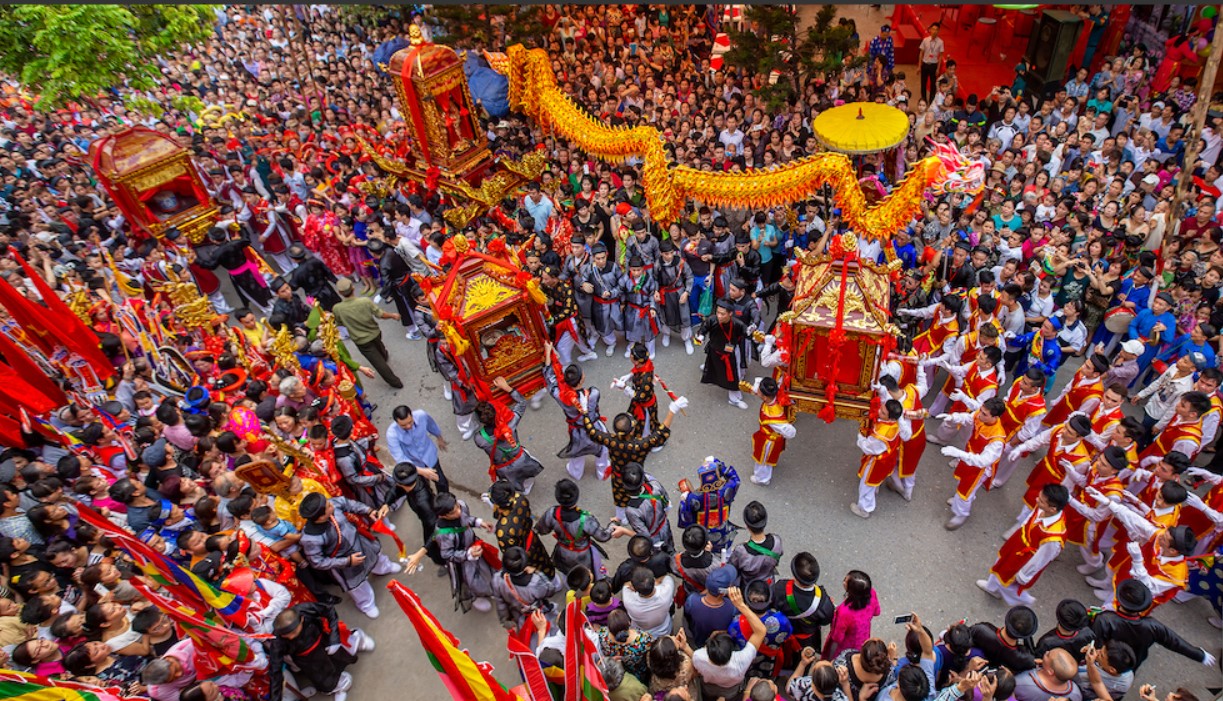
Bac Ninh preserves many traditional cultural values of the Vietnamese people in the Red River Delta, especially traditional festivals held at the beginning of the New Year.
Lim Festival, a typical festival of the Kinh Bac region and a gathering place for the essence of Quan Ho folk singing, will take place over two days from February 28 to March 1, 2026 (the 12th and 13th days of the first lunar month, Year of the Horse). In addition to solemn rituals, the festive part features Quan Ho singing performances, folk games, and traditional cultural activities.
In September 2009, Bac Ninh Quan Ho folk songs were recognized by UNESCO as an Intangible Cultural Heritage of Humanity.
Besides Lim Festival, Bac Ninh is known as a land of festivals, with around 500 large and small festivals held throughout the year, creating a distinctive cultural landscape of Kinh Bac.
3- Yen Tu Festival – Quang Ninh
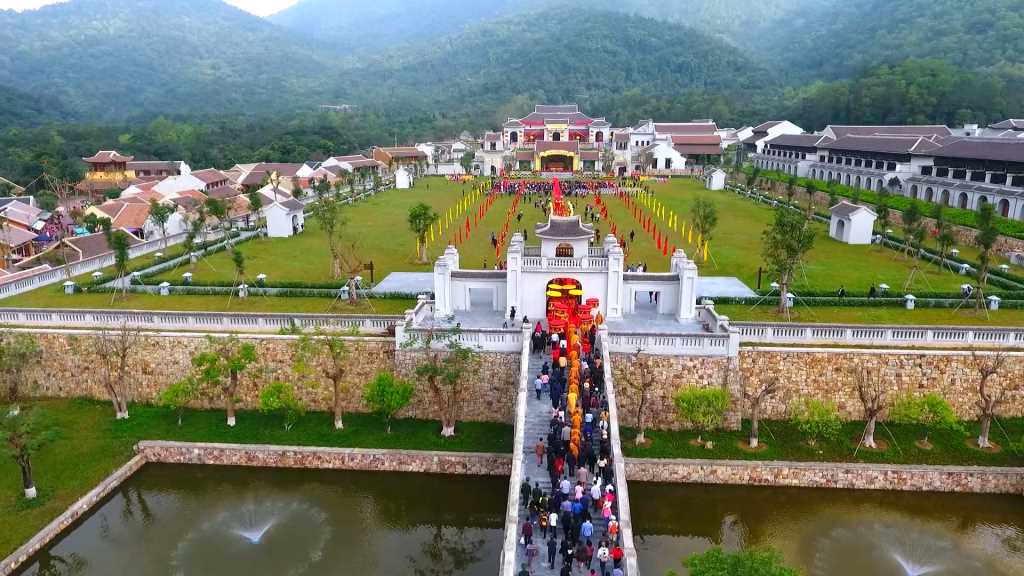
The Yen Tu relic complex and the Truc Lam Zen Buddhist philosophy have been recognized as a World Cultural Heritage site. This place preserves not only Vietnamese Buddhist and spiritual values but also amazing natural scenery that attracts domestic and international visitors.
The Yen Tu Spring Festival officially opens on February 26 (the 10th day of the first lunar month) at Truc Lam Palace, within the Yen Tu Historical and Scenic Complex, Yen Tu ward, Quang Ninh province.
At an altitude of 1,068 meters above sea level, Yen Tu is famous for its magnificent landscapes and ancient pagodas, hermitages, and towers hidden among old-growth forests. It is also the cradle of the Truc Lam Zen sect formed more than 700 years ago.
The Yen Tu Spring Festival lasts about three months and is one of the largest and longest spring festivals in Vietnam.
4- Tran Temple Festival – Ninh Binh
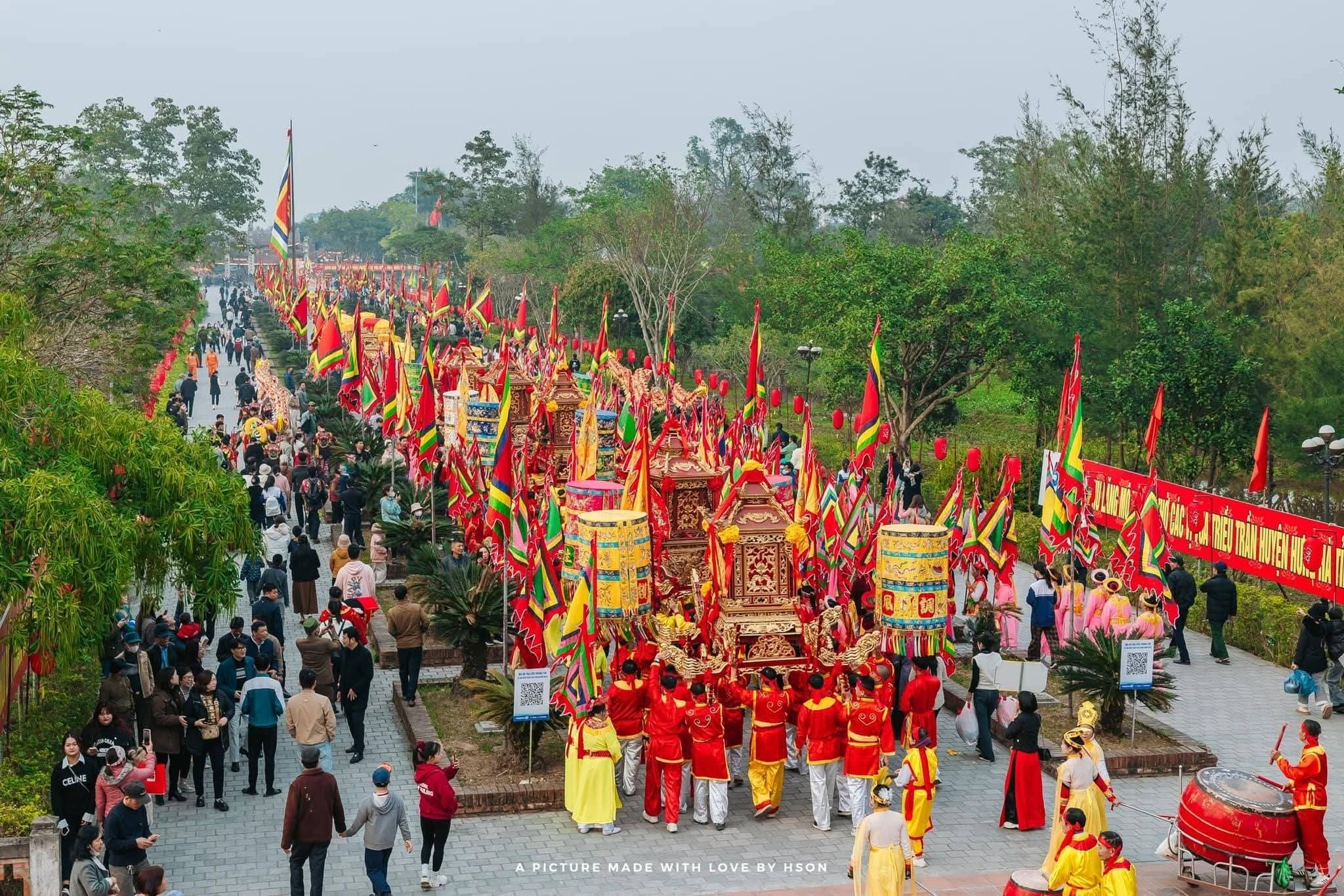
Tran Temple is located on Tran Thua Street, Nam Dinh ward, and is a relic complex associated with the Tran Dynasty at Thien Truong Palace.
The Tran Temple Festival—one of the largest festivals in northern Vietnam—takes place annually from the 11th to the 16th day of the first lunar month, featuring three main rituals: seal-opening ceremony, Ngoc Lo palanquin procession, and water procession for fish-offering rites.
The seal-opening and seal-distribution ceremony is held on the night of the 14th day of the first lunar month.
According to historical records, the seal-opening ritual dates back to the Tran Dynasty. After defeating the Mongol invaders, King Tran Thai Tong held a victory banquet and rewarded generals at Thien Truong Palace. Since then, at the beginning of each spring, Tran kings performed the seal-opening ceremony to worship heaven and earth and ancestors, marking the start of a favorable new year of governance.
5- Den Con Temple Festival – Nghe An
Den Con Temple is located in Phuong Can village, Quynh Mai commune, about 75 km north of Vinh city and about 220 km south of Hanoi.
People in Nghe An have a saying: “First Con, second Qua, third Ma, fourth Chieu Trung,” ranking Den Con among the most sacred temples. The others include Qua Son Temple (Do Luong), Bach Ma Temple (Thanh Chuong), and Chieu Trung Le Khoi Temple in Ha Tinh province.
The festival takes place from the 19th to the 21st days of the first lunar month. Besides solemn rituals, it features unique activities such as the “flying palanquin” procession, wrestling, boat racing, and traditional folk song Ca Tru singing .
In 2017, Den Con Temple Festival was recognized as a National Intangible Cultural Heritage.
6- Ba Thien Hau Pagoda Festival – Ho Chi Minh City
The Ba Thien Hau Pagoda Festival begins in early first lunar month. The main ceremony is held on the Full Moon Day and is one of the largest festivals in southern Vietnam.
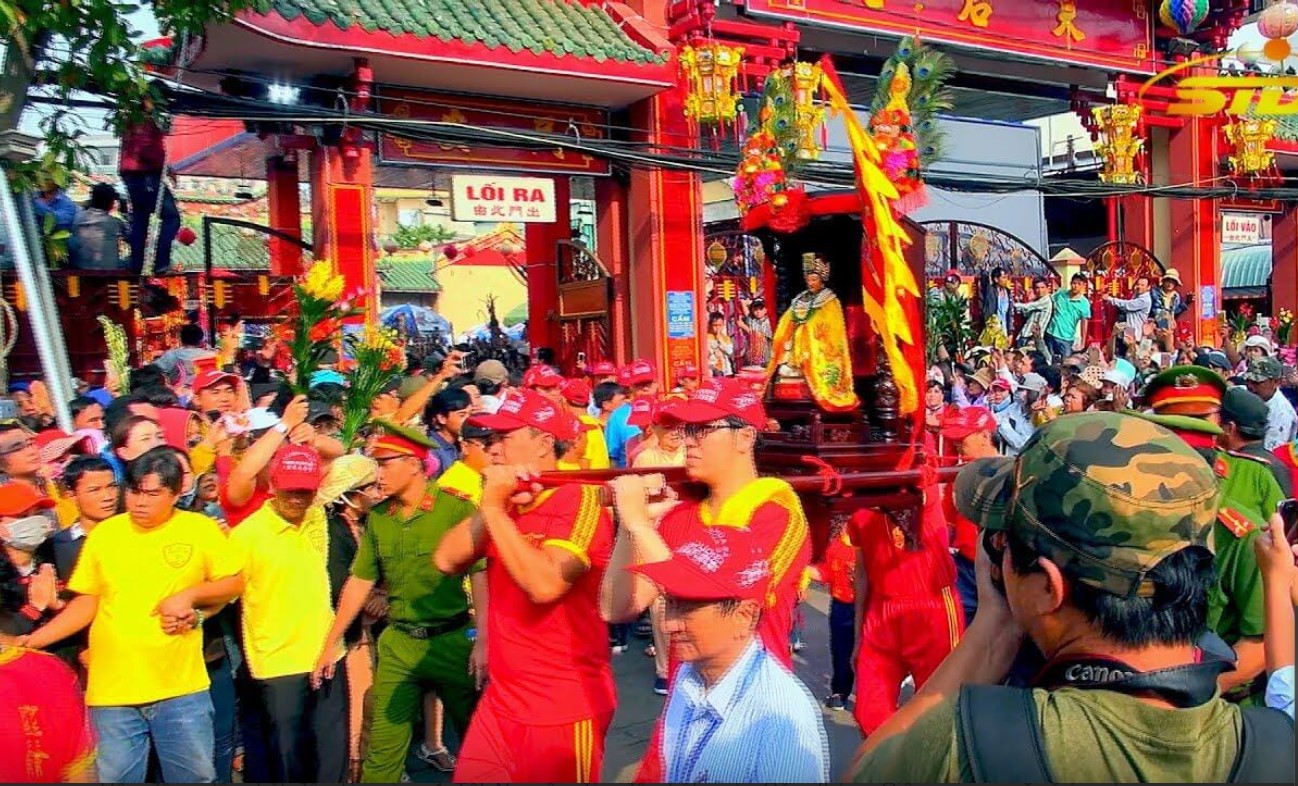
The statue of the Lady is placed on a palanquin and paraded through central streets of Thu Dau Mot (former Binh Duong), accompanied by lion-dance, classical opera (hat boi), and vibrant folk activities.
According to legend, Thien Hau Thanh Mau (real name Lam Mac Nuong, from Fujian, China) was granted the title in 1110 and is the patron goddess of seafarers. The procession honors her and prays for favorable weather, peace, and prosperity for fishermen and merchants.
Besides Thu Dau Mot, Thien Hau temples in Lai Thieu, Cho Bung, and Bung Cau also hold festivals on the Full Moon of the first lunar month, creating a bustling pilgrimage atmosphere in Southeast Vietnam.
7- Nguyen Tieu (Lantern Festival) Parade – Ho Chi Minh City
The Nguyen Tieu Festival in Ho Chi Minh City is one of the distinctive cultural festivals of the Chinese community in Cho Lon.
The center of activities is Nghia An Assembly Hall, dedicated to Quan Vu (Quan Thanh De Quan), a symbol of loyalty and heroism during the Three Kingdoms period.
Each year, the two biggest ceremonies are the Nguyen Tieu Festival (13th day of the first lunar month) and the anniversary of Quan Cong (24th day of the sixth lunar month), regarded as his birthday and day of deification.
The parade runs from 4:30 PM to 6:30 PM with about 1,000 performers from Chinese assembly halls. Starting from Nghia An Assembly Hall on Nguyen Trai Street, the procession passes through Tan Da, Tran Hung Dao, Phung Hung, Hai Thuong Lan Ong, Do Ngoc Thanh, Nguyen Trai, Chau Van Liem, Lao Tu, and Luong Nhu Hoc streets before returning to the starting point.
During this time, Vietnamese and Chinese residents visit temples to pray for peace and good luck.
8- Ong Pagoda Festival – Dong Nai
Ong Pagoda in Bien Hoa, located along the Dong Nai River, was originally Quan De Temple established in 1684. It is associated with General Tran Thuong Xuyen and Chinese settlers who came to Cu Lao Pho to reclaim land and establish livelihoods after pledging allegiance to the Nguyen Lords.
The festival is held annually on the 10th day of the first lunar month in Tran Bien ward. In 2023, the Ong Pagoda Festival was recognized as National Intangible Cultural Heritage.
The annual event includes street deity processions, Don Ca Tai Tu music, classical opera, lion dances, calligraphy writing, and floating lantern releases.
9- Ba Den Mountain Festival – Tay Ninh
The Ba Den Mountain Spring Festival opens on the 4th day of Lunar New Year and lasts through the first lunar month. It is a famous traditional festival in Tay Ninh and southeastern provinces.
Ba Den Mountain is an extinct volcano located mainly in Binh Minh ward, Tay Ninh province. At 986 meters high, it is the tallest mountain in southern Vietnam, nicknamed “The First Heavenly Mountain.”
According to 19th-century records, Ba Den Mountain was considered a sacred mountain guarding Gia Dinh (old Saigon), described as having “golden bells hidden in the lake and dragon boats gliding under moonlight.” At the beginning of the year, people and tourists make pilgrimages here to pray for peace and luck.
10- Lam Chay Festival – Tay Ninh / Long An
The Lam Chay Festival takes place from the 14th to the 16th days of the first lunar month at Tan Xuan Communal House relic site, Tam Vu commune (former Long An province). It commemorates patriotic scholars Do Tuong Phong and Do Tuong Tu, who were executed by French colonialists.
Over time, the festival also carries the meaning of praying for favorable weather, good harvests, and preserving traditional folk values.
The most important ritual is inviting Ong Tieu (Tieu Dien Dai Si), a Bodhisattva who subdues demons and saves sentient beings, from the pagoda to the communal yard.
Besides ceremonial rites, the festive part includes lion dances, classical opera, folk games, cultural performances, and the highlight ritual of “grabbing blessings” from the offering rack after worship.